Determining the right price strategy is crucial for any business looking to maximize profits and remain competitive. It involves more than just picking a number; it’s about understanding your market, aligning with your business goals, and communicating the value of your product or service. In this guide, we will explore various price strategies that can help you achieve these objectives, craft prices that appeal to your target audience, and position your business for success. Additionally, we will discuss the concept of price optimization and its importance in crafting winning pricing models.
Key Takeaways
- Pricing strategies are essential for reflecting a brand’s value, considering market dynamics and fulfilling corporate goals while optimizing profit and market share.
- Successful pricing involves setting clear objectives, analyzing market conditions and consumer behavior, and balancing costs with profit targets to align with brand narrative and financial goals.
- Various pricing models such as penetration, premium, value-based, dynamic, psychological, subscription, freemium, cost-based, competitive, and others aim to maximize revenue, customer loyalty, and market share in accordance with unique business and customer segment needs.
Pricing Fundamentals
Deciphering Price Strategy: A Comprehensive Overview
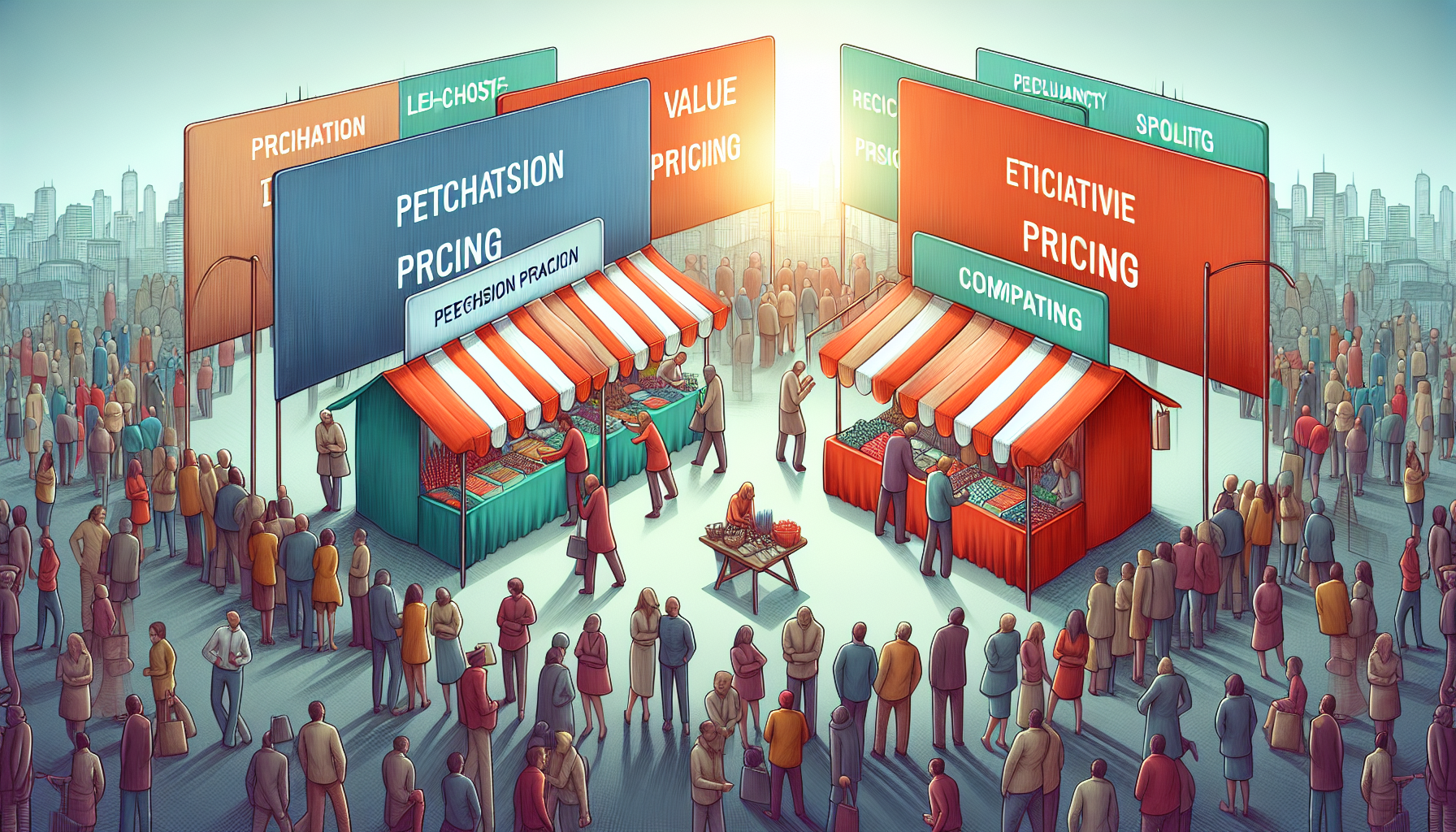
The realm of pricing strategies is vast and intricate, serving as the backbone of a business’s revenue generation. It’s not just about finding a sweet spot; it’s a nuanced process involving various pricing tactics that reflect the brand’s value, consider market and consumer dynamics, and align with corporate objectives.
Mastering the art of pricing enables businesses to convey their product’s worth, sway purchasing decisions, and drive their venture towards financial success.
Unveiling the Concept of Price Strategy
At its core, a pricing strategy is a sophisticated method that defines how a business will price its products or services to optimize for profit and market share. Articulating the value of your product in a way that resonates with your target audience is the main focus here.
Whether it’s determining how price sensitivity influences consumer demand or setting margins to reflect the product’s premium status, pricing strategies provide the framework for sustainable profit generation.
Importance of Pricing in Business
Pricing is a crucial aspect of any business, as it directly affects revenue, profitability, and customer perception. A well-crafted pricing strategy can make or break a company’s success. Pricing is not just about setting a price for a product or service; it’s about creating a value proposition that resonates with customers and differentiates the business from its competitors. An effective pricing strategy communicates the value of your offerings, influences purchasing decisions, and positions your brand in the market. By understanding the importance of pricing, businesses can leverage it as a powerful tool to drive growth and achieve their financial goals.
Pricing as a Growth Lever
Pricing is often overlooked as a growth lever, but it can have a significant impact on a company’s revenue and profitability. Small changes in pricing can lead to substantial increases in revenue, making it a critical component of a business’s growth strategy. By optimizing pricing, companies can increase revenue, improve profitability, and gain a competitive edge in the market. For instance, a slight increase in price can significantly boost profit margins without deterring customers, while strategic discounts can attract new customers and increase market share. Recognizing pricing as a growth lever allows businesses to make informed decisions that enhance their financial performance and market position.
The Mechanics Behind Price Strategy
Understanding the mechanics of pricing strategy is akin to assembling a puzzle; every piece must align perfectly to complete the picture. Product costing stands at the heart of this puzzle, ensuring companies maintain financial health and set realistic sales targets.
The strategy extends beyond mere numbers; it involves weaving a narrative around the price that boosts its perceived value for both consumers and stakeholders.
Crafting a Price Strategy That Works

A successful price strategy is a balanced blend of business acumen, market insight, and psychological understanding. It’s a strategic dance where every step, from identifying pricing objectives to adjusting for market conditions, aims to align with the overarching narrative of the brand and its financial goals.
We’ll now examine the components that constitute a successful pricing strategy.
Identifying Your Pricing Objectives
Pricing objectives are the compass that guide a business’s pricing journey, determining the direction and destinations along the path to revenue growth. Price elasticity, which measures how changes in price affect demand, is crucial in setting these objectives as it helps businesses understand the potential impact of their pricing decisions. Whether the aim is to maximize short-term profits, establish market dominance, or simply keep the lights on, setting clear pricing objectives provides a benchmark for measuring success and informs the strategic choices made in pricing products and services.
Pricing Analysis and Research
Pricing analysis and research are essential components of developing an effective pricing strategy. This involves understanding the target market, customer behavior, and competitor pricing. By analyzing market trends, customer preferences, and competitor pricing, businesses can identify opportunities to optimize their pricing strategy and stay ahead of the competition. Effective pricing analysis includes gathering data on customer willingness to pay, evaluating the competitive landscape, and assessing the cost structure. This comprehensive approach ensures that pricing decisions are data-driven and aligned with market realities, enabling businesses to set prices that maximize revenue and profitability.
Determine Your Value Metric
A value metric is a critical component of pricing analysis, as it helps businesses determine the value of their product or service. A value metric is a quantifiable measure of the value that a product or service provides to customers. By determining the value metric, businesses can set prices that reflect the value they provide to customers, increasing the likelihood of customer adoption and loyalty.
To determine the value metric, businesses should consider the following factors:
- Customer needs and pain points
- Competitor pricing and offerings
- Market trends and demand
- Product or service features and benefits
- Customer willingness to pay
By analyzing these factors, businesses can determine a value metric that accurately reflects the value of their product or service, enabling them to set prices that drive revenue and growth. This approach ensures that pricing is not only competitive but also aligned with the perceived value, fostering customer satisfaction and long-term loyalty.
Analyzing Market Conditions and Consumer Behavior
The landscape of consumer behavior and market conditions is ever-shifting, making the analysis of these elements paramount in forging a price strategy. Price discrimination, a strategy where businesses tailor prices to different market segments based on their willingness to pay, can be used to optimize pricing. Through meticulous research, businesses can anticipate how customers react to pricing decisions, adapting their strategies to meet the ebb and flow of market demand. This foresight is critical for tailoring prices that resonate with the target market and drive sales.
Adjusting for Costs and Profit Targets
Adjusting for costs and setting profit targets is a balancing act that ensures the longevity and competitiveness of a business. By meticulously analyzing production costs, companies can implement measures to control spending, set appropriate pricing, and ultimately foster an environment ripe for growth and profitability.
Delving Into Different Pricing Strategies

The landscape of common pricing strategies is as diverse as the marketplace itself, ranging from penetration pricing to tap new markets to premium pricing that builds on brand exclusivity. Each strategy carries its unique set of benefits and challenges, tailored to different business goals and customer segments. Price anchoring, a concept where an initial price sets the standard for future pricing, plays a crucial role in these strategies.
Next, we’ll delve into the range of pricing strategies businesses employ to establish their market niche.
Penetration Pricing: Gaining Market Entry
Penetration pricing is the trojan horse of pricing strategies, entering the market with attractively low prices as part of a penetration pricing strategy to:
- Capture a large customer base swiftly
- Make a strategic investment in customer acquisition
- Lay the groundwork for future financial gains
- Disrupt the market
- Establish a strong presence in a new segment
This initial sacrifice in profit margins is a bold move that, if executed with precision, can lead to long-term success.
Premium Pricing: Establishing High-Value Perception
On the opposite end of the spectrum, premium pricing is the art of setting prices that echo the luxury and high-value perception of a brand. This premium pricing strategy targets a segment of the market that associates higher prices with superior quality, creating a sense of exclusivity and prestige around the product. It’s a powerful tactic for brands that stand tall on the pillars of exceptional quality and a distinguished image.
Value Based Pricing: Aligning Price with Perceived Worth
Value-based pricing is the strategy of setting prices that mirror the customer’s perceived value of the product or service. It’s a customer-centric approach that hinges on understanding and delivering on the expectations and needs of the target demographic. By aligning price with perceived worth, businesses can command higher prices and foster deeper customer loyalty.
Dynamic Pricing Tactics for the Agile Marketer

Dynamic pricing is the agile marketer’s chess game, adjusting prices in real-time in response to fluctuating market demand and customer behavior. With the support of cutting-edge technology and data analytics, businesses can make swift pricing decisions that maximize revenue and keep them a step ahead of the competition by implementing a dynamic pricing strategy. Price transparency is crucial in dynamic pricing tactics to ensure customers understand the reasons behind price changes and maintain trust.
We’ll now investigate how dynamic pricing can be strategically implemented for optimal results.
Harnessing Market Demand Fluctuations
The ebb and flow of market demand are crucial determinants in the dynamic pricing model, influencing price adjustments that can lead to significant revenue optimization. By staying attuned to these fluctuations, businesses can set pricing objectives that capture the full revenue potential of various market conditions, from peak seasons to off-peak times.
Implementing Technology for Real-Time Pricing
The implementation of dynamic pricing would be virtually impossible without the aid of advanced technology. Software tools that offer real-time data analysis and competitor tracking empower businesses to make informed pricing decisions swiftly, adapting to market changes with precision and ensuring their pricing strategies remain competitive and profitable.
Psychological Pricing: Influencing Customer Decisions
Psychological pricing is the subtle art of influencing customer decisions through price points that trigger subconscious reactions. This approach leverages the nuances of human psychology to encourage purchase behaviors, often without the customer being fully aware of the influence. It’s a strategic layer that, when applied correctly, can enhance the effectiveness of established pricing strategies. Price perception plays a crucial role in psychological pricing, as it shapes how customers view the value and affordability of a product.
The Charm of Numbers: Pricing Just Below Thresholds
Charm pricing is the classic example of psychological pricing in action, where prices ending in the digit ‘9’ play on the customer’s perception of getting a deal. This tactic exploits the left-digit bias, making prices seem significantly lower and more attractive, even when the difference is minimal.
Bundling Products: Creating Perceived Savings
Bundled product pricing is a clever way of packaging value, where customers perceive they are getting more bang for their buck. By offering multiple products or services together at a discounted rate, businesses can entice customers to purchase more while clearing inventory and increasing overall sales.
Maximizing Revenue with the Right Pricing Model
Revenue maximization is the ultimate goal of any pricing model, and finding the right one can be the key to unlocking a business’s financial potential. Some popular pricing models include:
- Subscription models that ensure steady income
- Freemium models that entice with free offerings
- Tiered pricing models that offer different levels of service at different price points
- Dynamic pricing models that adjust prices based on demand or other factors
Price sensitivity analysis helps businesses understand how different pricing models affect consumer behavior and revenue, making it crucial for choosing the right pricing strategy.
The right pricing model can lead to customer loyalty, market expansion, and ultimately, a healthier bottom line.
Subscription Models: Building Customer Loyalty
Subscription models are a cornerstone of customer loyalty, providing businesses with a predictable and consistent revenue stream. By prioritizing customer experience and engagement, subscription pricing can foster a strong connection between the customer and the brand, enhancing retention and long-term loyalty.
Freemium Models: Attracting Users with Free Offers
The freemium pricing model is the gateway to a larger customer base, offering fundamental services for free while enticing users with premium paid options. This approach allows customers to experience the product at no initial cost, which can build trust and pave the way for future financial commitments.
The Impact of Cost-Based Pricing on Business Sustainability
Cost-based pricing is a cornerstone of business sustainability, ensuring that prices cover production expenses and generate satisfactory profits. By grounding pricing decisions in the reality of production costs, businesses can maintain a competitive edge while fostering long-term financial stability. A price floor is crucial in this context as it sets the minimum price at which a product can be sold, ensuring that production costs are always covered.
Calculating Accurate Production Costs
Accurate production cost calculations are the bedrock of cost-based pricing, ensuring that businesses price their products in a way that covers expenses and yields profits. By tracking and understanding all costs associated with production, businesses can set prices that sustain their operations and contribute to financial growth.
Setting Margins for Growth
Margins are the lifeblood of growth, providing the necessary buffer between cost and revenue to fuel a business’s expansion. Setting the right markup percentages is a strategic imperative that balances profitability with the competitive pricing necessary to thrive in the marketplace.
Competitive Pricing: Staying Ahead in a Crowded Marketplace
In the competitive arena of modern business, staying ahead often means adopting a competitive pricing strategy that attracts price-sensitive customers. By offering better value or lower prices than competitors, businesses can secure a vantage point in the crowded marketplace, drawing customers in and keeping rivals at bay.
Price benchmarking plays a crucial role in this strategy by evaluating competitor pricing structures to ensure that a business’s prices remain competitive.
Evaluating Competitor Pricing Structures
A thorough evaluation of competitor pricing structures is essential for crafting a competitive pricing strategy that resonates with consumers. By analyzing how competitors price their products and adjusting accordingly, businesses can position themselves strategically within the market, optimizing their appeal to potential customers.
Balancing Price and Value Proposition
The delicate balance between price and value proposition is at the heart of competitive pricing. By ensuring that prices reflect the quality and benefits of the product or service, businesses can justify their price points and maintain a strong competitive position.
Pricing for Market Share: Strategies to Dominate the Industry
Dominating an industry often requires aggressive pricing strategies that secure a significant market share. From skimming strategies that leverage high initial prices to economy pricing that appeals to budget-conscious consumers, the right approach can catapult a business to the forefront of its sector. Price leadership, where a company sets the price point that competitors follow, is crucial in establishing dominance and driving market share.
Skimming the Cream: High Initial Prices
Price skimming is a bold strategy that targets early adopters and maximizes short-term profits through high initial pricing. By catering to those willing to pay a premium for new and innovative products, businesses can reap substantial early revenue and establish a strong market presence using a skimming pricing strategy.
Economy Pricing: Winning the Price-Conscious Consumer
Economy pricing is the strategy of choice for businesses aiming to win over the price-conscious consumer. By setting lower prices and minimizing marketing expenses, companies can attract a broad customer base, compensating for thin margins with increased sales volumes. In this context, economy pricing can be considered an effective pricing strategy and the best pricing strategy for such businesses.
Adapting Pricing Strategies to Industry Trends
In the chameleon-like world of business, adapting to industry trends is non-negotiable for maintaining relevance and competitiveness. Tailoring pricing strategies to suit specific industry dynamics, customer demands, and pricing norms is a critical maneuver for companies aiming to stay in step with the changing tides of the marketplace. Price experimentation plays a crucial role in this process, allowing businesses to test and refine their pricing strategies to better align with industry trends.
Maintaining vigilance and agility allows businesses to adjust their pricing strategies, seizing opportunities and reducing risks associated with market changes.
Service Industry Nuances
The service industry presents unique challenges and opportunities in pricing, where strategies like hourly billing are commonplace among professionals. Yet, the shift toward project-based pricing reflects a growing demand for value alignment and transparency.
For service-based or SaaS companies, cost-plus pricing often takes a back seat to strategies that better reflect the intangible, high-value nature of the offerings, such as value-based pricing.
Product Industry Considerations
In the product industry, pricing strategies are often more straightforward, but they still require keen attention to the interplay between cost, customer expectations, and perceived value. Adopting industry-specific pricing models, such as value-based pricing in SaaS and B2B sectors, allows businesses to optimize profits while catering to the unique demands and psychological triggers of their customer base.
Summary
From penetrating new markets with aggressive pricing to fostering customer loyalty through subscription models, the spectrum of pricing strategies is vast and varied. Each approach carries its own set of rewards and risks, tailored to different business models and customer psychographics. By understanding and applying these strategies judiciously, businesses can not only survive but thrive in today’s competitive landscape, turning the art of pricing into a strategic advantage.
Frequently Asked Questions
What is the advantage of using penetration pricing strategy?
The advantage of using penetration pricing strategy is that it allows businesses to quickly attract a large customer base with low prices, establishing market presence and paving the way for future profitability.
How does premium pricing affect brand perception?
Premium pricing can elevate a brand’s perceived value and appeal to affluent customers seeking superior quality and exclusivity.
Can dynamic pricing be applied to any industry?
Yes, dynamic pricing can be applied to many industries, especially those with fluctuating demand, like hospitality, travel, and e-commerce. It’s a versatile strategy with widespread applicability.
Why is psychological pricing effective in influencing customer decisions?
Psychological pricing is effective in influencing customer decisions because it taps into subconscious perceptions of value, making customers feel like they are getting a better deal, and ultimately encouraging purchase decisions.
Is cost-based pricing suitable for digital products and services?
No, cost-based pricing is not suitable for digital products and services as production costs are less tangible, and value-based or competitive pricing strategies may be more effective.